
Remember when visiting a museum meant quietly staring at things behind glass? Those days are long gone. Today, it’s all about diving in and getting your hands (virtually) dirty. And a huge part of that shift? Touch screens. You see them everywhere now—as kiosks, massive tables, even entire walls. They’re not just a flashy gimmick; they’ve become a core part of how museums tell their stories.
So, let’s break down why these screens are such a big deal, how they’re being used, and what to think about if you’re considering them for your own space.
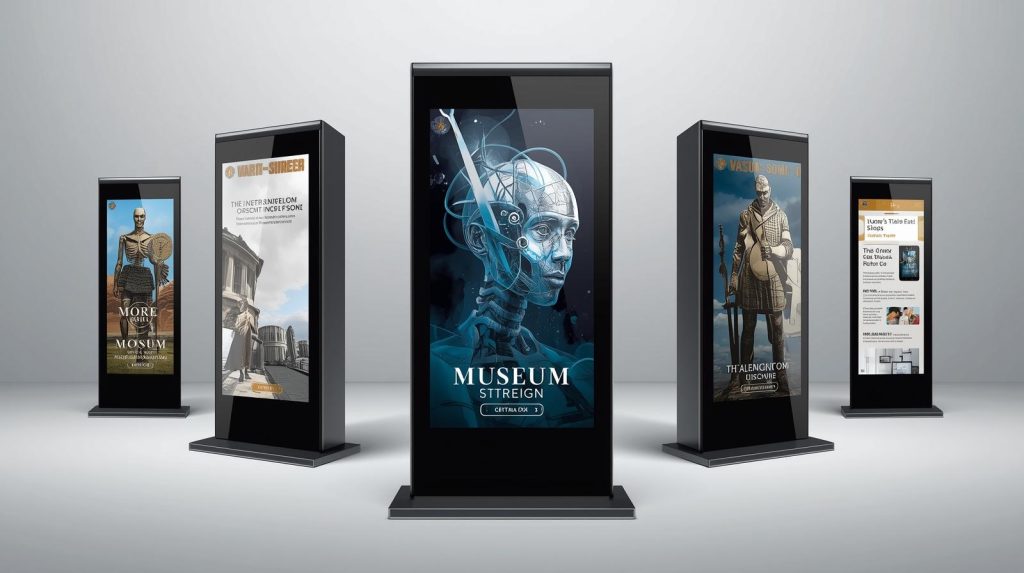
Why Bother with a Screen?
- They Make Learning Stick: It’s simple—doing is better than just seeing. Instead of just reading a plaque, a visitor can zoom in on a crazy-high-res image of a painting, watch a short documentary, or test their knowledge with a quick quiz. It turns a passive stroll into an active exploration.
- You’ll Never Get Lost Again: Big museums can be mazes. Interactive wayfinding kiosks are a lifesaver, offering custom routes based on your interests or how much time you have. Goodbye, awkwardly unfolding giant paper maps.
- A Welcome Mat for Everyone: With features like multiple languages, adjustable text sizes, and audio descriptions, these kiosks help make sure everyone feels included. It’s a huge step for accessibility.
- They’re Just Smarter to Run: Imagine wanting to update an exhibit’s info. Instead of reprinting a thousand brochures, you just push a digital update from your desk. It’s a long-term win for your budget and your sanity.
- A Quiet Boost for the Bottom Line: Placed strategically, kiosks can handle ticketing, gently suggest a donation, or collect valuable feedback as people leave. Some data even suggests they can boost the time people spend with an exhibit by up to 30%.
So, Where Do You Actually Put These Things?
The possibilities are pretty endless, but here are some of the most common spots:
- The Deep-Dive Station: Placed right next to an artifact, offering stories, photos, and 3D models you’d never get from a label.
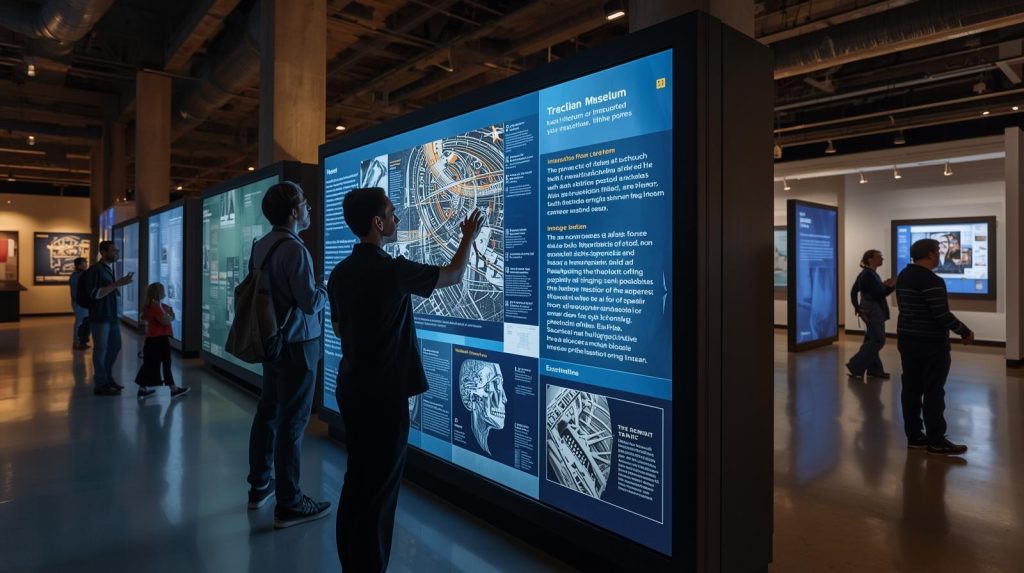
- The Collaboration Hub: Giant touchscreen tables where families or school groups can solve a puzzle or explore a timeline together.
- The Queue-Buster: Self-service ticketing kiosks that let people skip the line and get straight to the good stuff.
- The Feedback Box: Short, simple surveys at the exit that catch visitors while the experience is still fresh in their minds.
A Few Things to Keep in Mind
It’s not as simple as just bolting a screen to the wall. A little planning goes a long way.
- Make it Comfortable: If the screen is at a weird height or has a terrible glare, people will just walk right past it. A slight tilt can make a world of difference.
- Keep it Simple: The interface shouldn’t need a manual. Big buttons, clear menus, and a straightforward path are key. People have short attention spans!
- Build it to Survive a Field Trip: These things need to withstand thousands of pokes and prods. You’ll need durable screens, secure housings, and a plan for keeping them clean.
- Think of Everyone: Are the screens low enough for a child or someone in a wheelchair? Is there audio for those who can’t see the screen well? Involving accessibility experts early on is a must.
- Embrace the Data: The hidden superpower? These kiosks can tell you what’s working. You can see which content is most popular, where people are spending their time, and use that to make your exhibits even better.
It’s Not All Smooth Sailing, Of Course
There are real challenges. The upfront cost can be high, screens will get grubby and need maintenance, and you don’t want so much tech that it distracts from the actual artifacts. The key is balance—using screens to enhance the physical experience, not replace it.
What’s Next? The Future Looks Cool.
This tech is only getting more interesting. We’re moving towards gesture controls, integrating Augmented Reality to bring exhibits to life, and using AI to offer personalised tours. The goal is to make the digital and physical worlds blend seamlessly.
Why We’re Excited to Help
This is exactly the kind of challenge we at UPTI love. We’re not just hardware suppliers; we’re partners in storytelling. We help cultural spaces figure out the right tech, design intuitive interfaces, and build solutions that are both future-proof and sustainable. Being based in Australia, we get the local landscape, from regulations to what visitors actually expect.
The Bottom Line
Touchscreens have moved from being a neat trick to an essential tool. They’re about creating deeper connections, welcoming more people, and running a smarter operation. If you’re thinking about how to bring your exhibits into the 21st century, a well-planned interactive journey might be just the thing.
And if you need a hand figuring it out, you know who to call.