
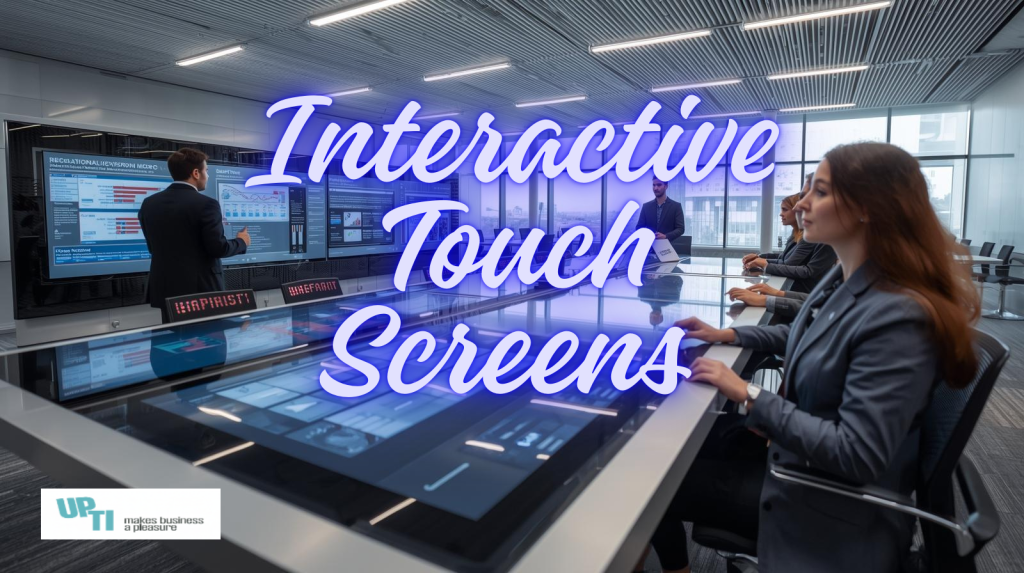
Training in Australia isn’t what it used to be. Honestly, learners are over the whole death-by-PowerPoint thing and those marathon lecture sessions. These days, people want to actually do something—whether they’re in the room or tuning in from their living room. They’re after sessions that are hands-on, interesting, and honestly, not a slog to get through.
So, what’s helping make that happen? Well, one piece of the puzzle has been the rise of interactive touch screens. They’ve sort of just appeared everywhere, haven’t they? You walk into a modern training space or a classroom, and there it is—this big screen on the wall. And it’s not just for show. It’s changing how trainers teach and how people learn together.
So, what even are they?
Think of them as giant tablets or digital whiteboards. You can touch them, write on them with a special pen, swipe through content—the works. Instead of a trainer just talking at you, these screens let everyone get their hands dirty with the material. They’ve pretty much replaced the old whiteboard and projector combo in a lot of places. A trainer can flip from writing notes to pulling up a video to sketching a diagram, all without fumbling with different tech. It’s all right there.
How are people actually using them?
In practice, it’s the little things that add up. A trainer can sketch out a complex idea on the fly during a discussion, or highlight a key point when a question comes up. Learners can walk up and add their own thoughts, drag and drop elements to solve a problem, or work through a scenario as a group.
They’re a real game-changer for hybrid sessions, too—you know, when half the team is in Sydney and the others are dialling in from Perth or Brisbane. The interactive touch screen helps bridge that gap, so the remote folks aren’t just passive faces in a Zoom grid. In a spread-out country like ours, that’s pretty crucial.
Why does this “interactive” stuff work better?
It’s kind of obvious when you think about it: we learn more when we’re part of the action. These screens help by:
- Grabbing and holding people’s attention (no small feat!).
- Breaking down tricky topics with visuals.
- Catering to people who learn by seeing, doing, or discussing.
- Turning a monologue into a conversation.
Sessions stop feeling like a one-way broadcast and start feeling like a workshop. And when people are involved, they simply remember more.
It’s not just schools—it’s in business, too.
Loads of Australian companies have these in their training rooms now. They’re using them for everything from onboarding new starters to running leadership workshops, or even dry-but-necessary stuff like safety compliance sessions. For trainers, it just makes the whole delivery feel more fluid and professional. You can ditch the rigid slide deck and actually adapt to what the room needs in the moment.
Why is everyone in Australia jumping on board?
The training sector here is tough. People have endless options, so providers have to prove their methods are up-to-date and actually work. Having interactive touch screens as part of your toolkit shows you’re serious. It improves the whole experience, supports flexible learning models, and mirrors the tech people use in modern workplaces. It’s fast becoming less of a luxury and more of a standard expectation for good training.
How a place like UPTI uses them.
Take UPTI, for example. Their whole deal is practical skills and real outcomes. For them, the interactive touch screen is just a tool—a really useful one—to make that happen. It helps their trainers explain things clearly, gets everyone participating, and creates a space where asking questions feels natural. By weaving this tech into their approach, they make sure their training stays relevant and actually engages today’s learners and businesses.
What’s next?
As jobs and industries keep evolving, so does training. Interactive touch screens are clearly becoming a big part of that evolution in Australia. At the end of the day, when they’re used thoughtfully, they’re just about something simple: better communication, more engagement, and actually helping people learn. And that’s what it should all be about, right?